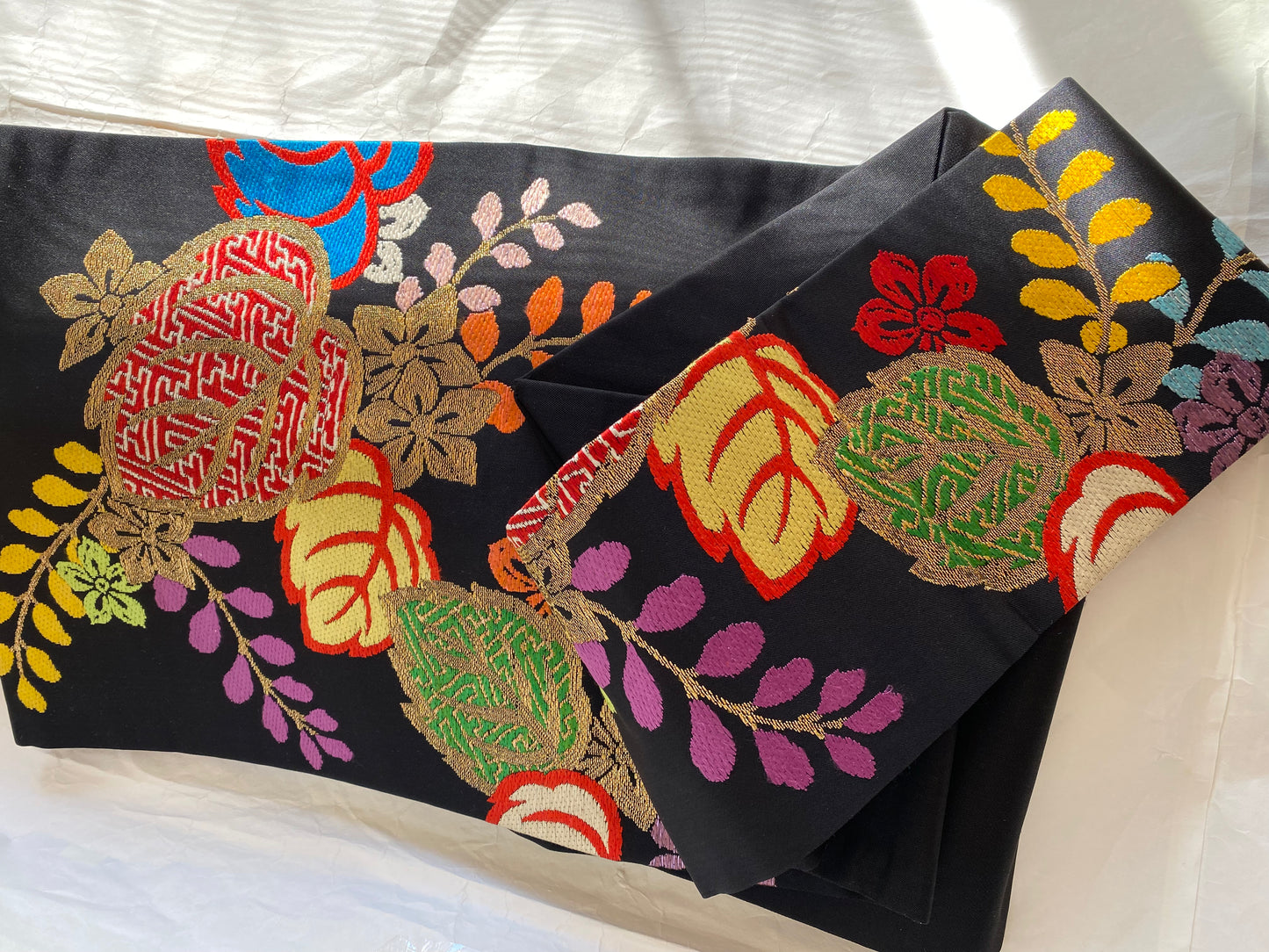
Nagoya Obi Paulownia and Auspicious Motifs Tatsumura Heizo II (1905-1978) Kyoto (Nishijin), c. 1965–1970
Nagoya Obi Paulownia and Auspicious Motifs Tatsumura Heizo II (1905-1978) Kyoto (Nishijin), c. 1965–1970
※ Shipping included · Duties and taxes not included
※ Livraison incluse · Droits de douane et taxes non inclus
« Pour la version française, veuillez consulter ci-dessous.»
(English)
Click on the photo to enlarge it
A long-established Nishijin-ori weaver in business for four generations, "Tatsumura's Obi" is synonymous with high-quality obi.
Tatsumura II particularly popularized Nishijin-ori around the world, receiving orders from Christian Dior. The term "beauty of textiles" was coined at the time.
(Français)
Cliquez sur la photo pour l'agrandir.
Tisserand de Nishijin-ori réputé depuis quatre générations, « l’obi de Tatsumura » est synonyme d’obi de haute qualité.
Tatsumura II a notamment popularisé le Nishijin-ori dans le monde entier, recevant des commandes de Christian Dior. L’expression « beauté des textiles » a été créée à cette époque.
* Profile International license holder who conveys kimono culture
** EU customs:Please note that VAT and customs duties will be charged upon delivery and are the responsibility of the buyer.
** HS Code: 6213.10 Discription: Vintage silk Fukuro obi sash (Nishijin-obi), Material; 100% silk, Country of origin,: Japan
** Please note that international orders may be subject to import duties, VAT, and customs clearance fees. For customers in the European Union, the total charges are typically between 25-35% of the declared item value. These charges are determined by the destination country and are the responsibility of the recipient.
(Example: France - approx. 28-35%, Italy - approx. 25-35%, Germany - approx. 25-30%)
*写真の上をクリックすると拡大して見られます。
四代続いている西陣織りの老舗で「龍村の帯」と言えば高級帯の代名詞です。
二代目龍村は、特に西陣織りを世界に広め、クリスチャン・ディオールからも注文を受けています。当時、「織物の美」という言葉も生まれました。
*プロフィール
着物文化を伝える国際免許保持者
Couldn't load pickup availability
Low stock: 1 left
View full details